Trust creates reach
Tracked sharing and company-funded bounties turn employees, investors, customers, alumni, and super-connectors into an active sourcing network.
 Frontier Recruitment Guide 2026
For first-time founders, experienced operators, and teams hiring where the playbook is still being written. Build the team for what comes next—with more human context, better evidence, and fewer empty rituals.
The core rule. Use the lightest process that answers the real hiring risks. Interviews, async questions, work samples, trials, and references are tools—not mandatory stages.
Seven chapters for building the lightest hiring process that can still support a consequential decision.
You may be hiring your first specialist, building a function you have never led, or searching for someone capable of work that barely existed a few years ago. The challenge is not to run more interviews. It is to decide what evidence matters and create a fair way to understand the person behind the résumé: what they have done, what drives them, how they make decisions, and how they behave when the answer is not obvious.
Sorcrr begins with more context than a résumé-first process: trusted referral paths, structured video, verification, reviews, and an evidence-backed Career Rank Score. Use that context to ask better questions—not to outsource judgment.
Sorcrr is not merely another place to store applicants. It improves three moments where traditional hiring loses signal: finding the right people, understanding them before a call, and making a decision the team can explain.
Tracked sharing and company-funded bounties turn employees, investors, customers, alumni, and super-connectors into an active sourcing network.
Video JDs, team introductions, candidate profiles, and async questions add context that forms and résumés flatten.
CRS, verification, reviews, interviews, votes, work evidence, and references create one inspectable decision record.
Post broadly → scan blank résumés → repeat questions across rounds → collect opinions in scattered notes → add another interview when the room is unsure.
Source through trust → review reusable human signal → inspect what is already known → test only the open risks → vote independently → decide from evidence.
A job post should not require a workshop. Start with the problem, compensation, location, and owner. Use Advanced Create when the role benefits from a custom funnel, videos, assessments, interview assignments, or hiring terms.

Define the role, compensation, location, and hiring owner. SAI can help draft the description for human review.
Shape the funnel, add Video JD and team context, configure optional evidence, assign interviewers, and set the decision path.
Show the problem, the manager, and the actual team so candidates can decide whether the work makes sense for them.
Give employees, investors, customers, and communities a clear brief and a tracked link—not a vague request to “send anyone good.”
No single sequence is the Sorcrr sequence. Build from the role’s uncertainty, cost of error, and available evidence.

| Hiring situation | Suggested path after profile + CRS | Why |
|---|---|---|
| Early-team / generalist | Core Sorcrr signal review → structured interview → references / offer If needed live screen, async motivation question, or short work sample |
Motivation, range, judgment, and working style matter more than a rigid credential match. |
| Specialist / technical | Core Sorcrr signal review → career or behavioral → functional evidence → offer If needed live screen, work sample, or paid trial Risk-driven values / references |
Distinct capability and collaboration questions may require different evidence. |
| Frontier / newly defined role | Core async scenario → structured exploration / simulation → offer If needed live screen, expert review, or paid project |
The hiring team may be learning what excellence looks like while it recruits. |
| Leader / high-trust role | Core career history → strategic / functional → values → references → offer Optional lawful probation; trial uncommon |
People, money, safety, data, and reputation justify deeper verification. |
Sorcrr can remove the traditional first screen. When the reusable profile, job-specific async answer, verification, reviews, and CRS already establish role relevance, motivation, contribution, and workable constraints, move directly to the deeper interview. A live screen, trial, work sample, or additional interview belongs only when it answers a named question that the current evidence cannot.
A Video JD is a realistic preview, not a brand film. For an early company or frontier role, the people and problem are often more persuasive than the company name.
Connect the supervisor profile and the people the candidate will actually work with. Each person should add new context rather than repeat the founder.
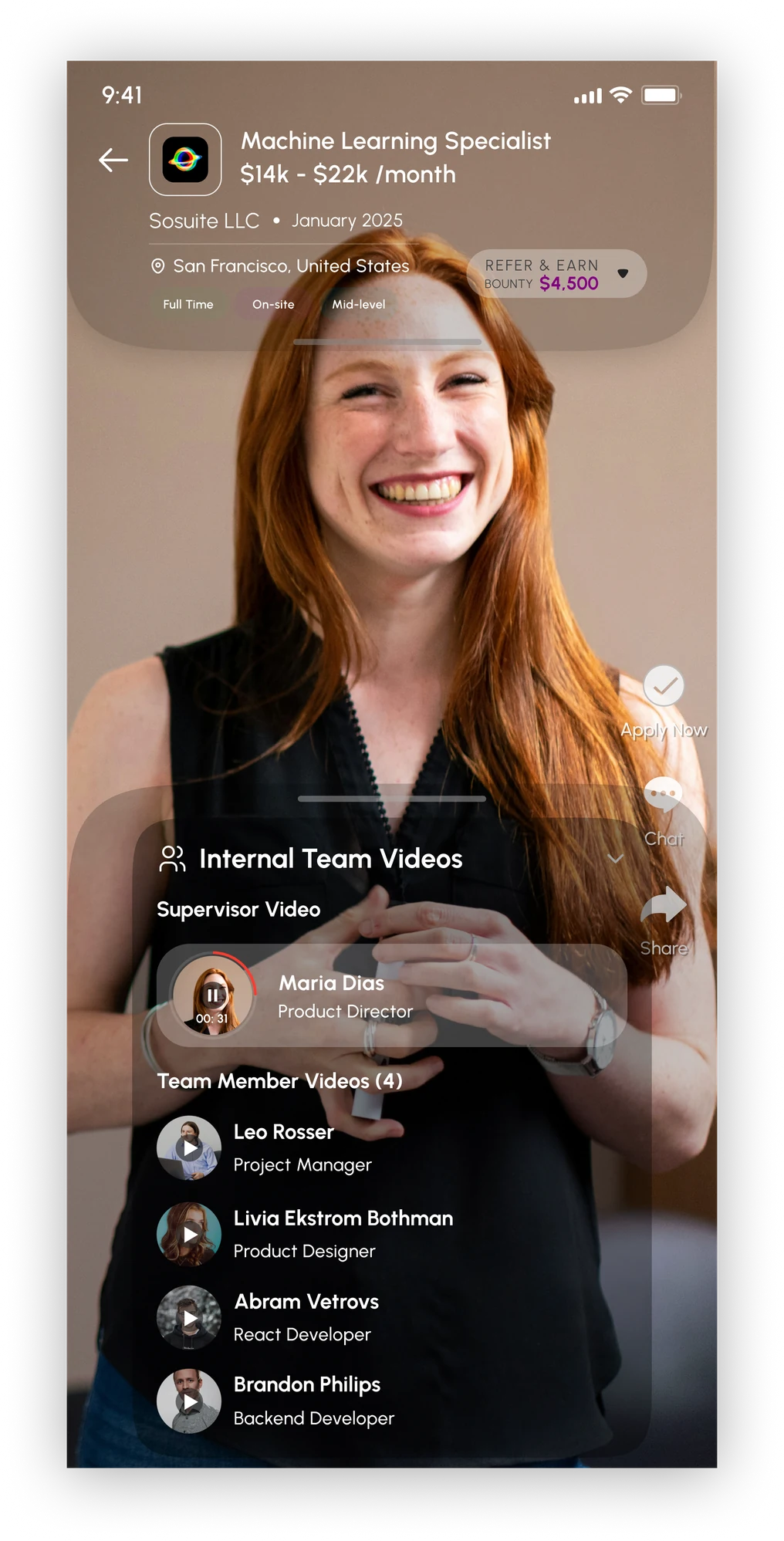
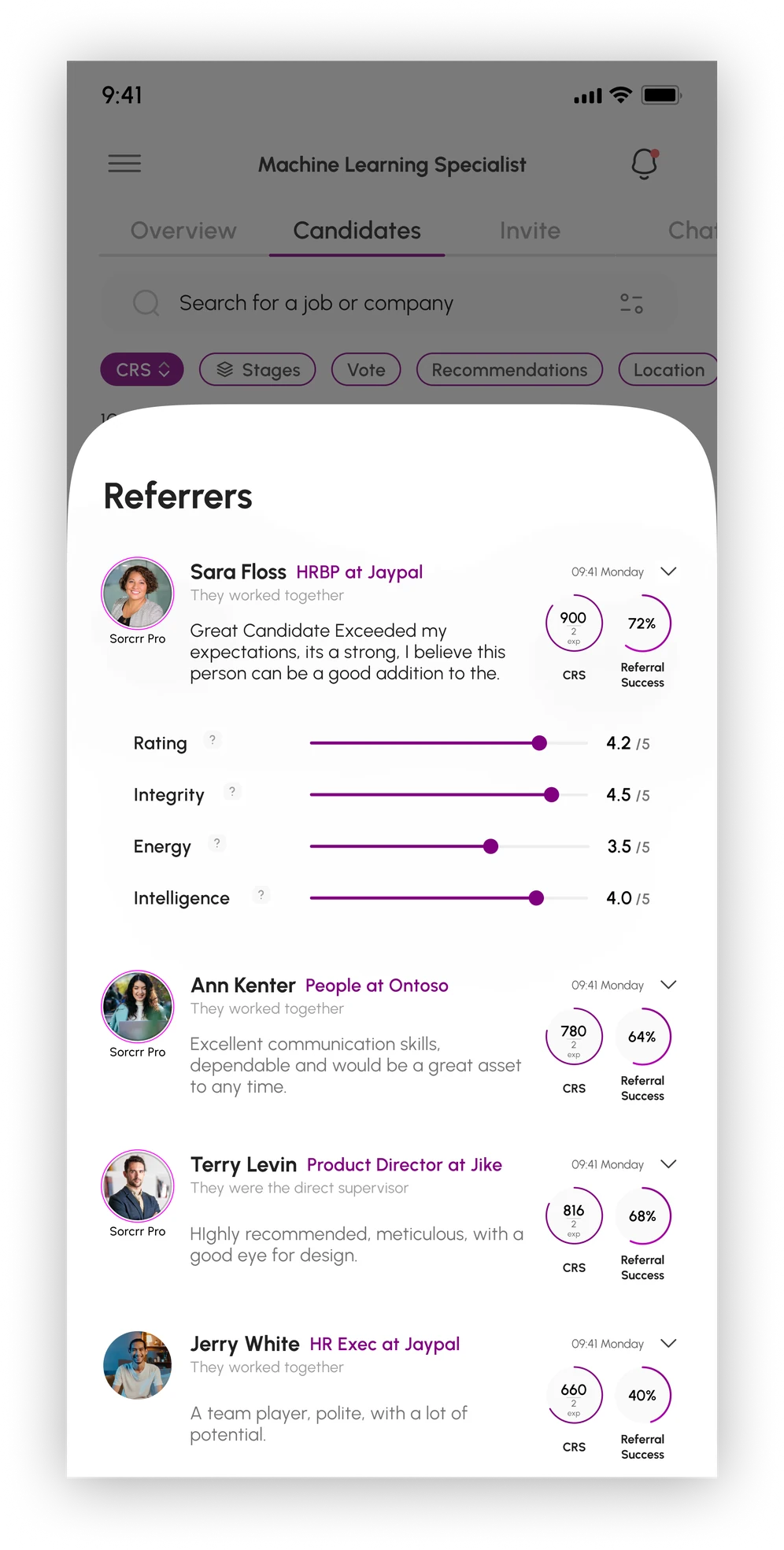
The bounty creates motion. The brief creates quality. Tell referrers the problem, three outcomes, must-have evidence, who may thrive, who may not, compensation, and why the role matters. Share the Video JD and tracked link so the story and attribution travel together.
One standard for everyone. A referral is valuable context, not a credential. Referred and non-referred candidates should face the same job-related questions, rubrics, and decision thresholds.
Career Rank Score brings four dimensions into one read: Ratings, Integrity, Intelligence, and Energy. It is a navigation tool into the evidence—not an instruction to hire or reject.
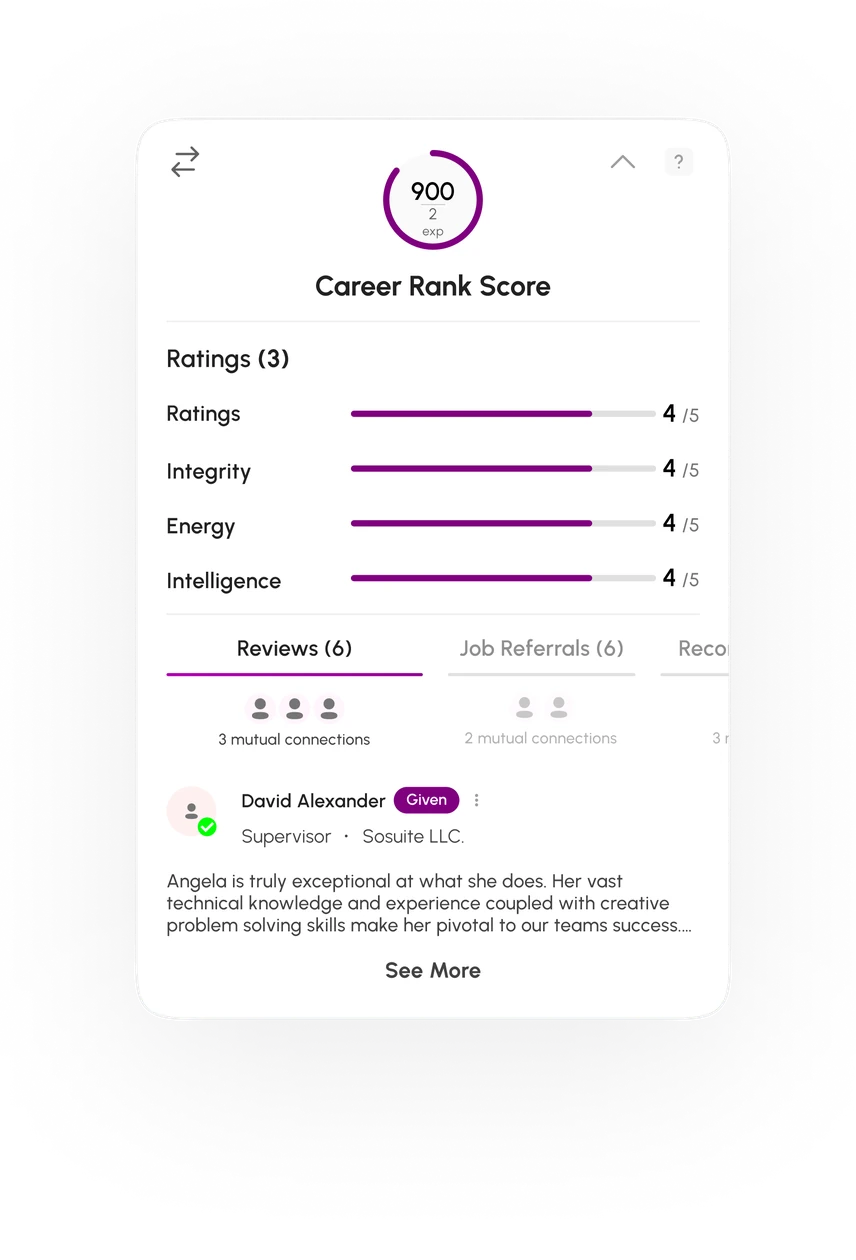
Review-backed context about prior work and outcomes. Sparse evidence means investigate, not reject.
Whether words, commitments, and actions line up across the evidence. A concern is a reason to clarify and verify—not a verdict.
Role-relevant judgment, learning, and problem framing—not prestige or vocabulary.
Initiative and sustained follow-through—not extroversion, visible excitement, or overwork.
The Integrity rating is one view of that pattern, drawn from people who have worked with the candidate. Read it with their written reviews, feedback, recommendations, and relationship context—not in isolation. Then compare that outside view with the candidate’s résumé and career timeline, relevant life and work experience, the values revealed by their choices, interview stories, and verified outcomes. Consistency across independent evidence is the signal.
A mismatch is a question to resolve. Give the candidate a fair opportunity to explain it, verify the relevant facts, and distinguish an honest correction or change in context from a repeated pattern of saying one thing and doing another.
Never score appearance. Do not infer any dimension from a candidate’s face, voice, accent, eye contact, home background, or camera polish.
What work, craft, or problem are they unusually good at? What example supports it?
What problem, environment, and team do they want next—and why now?
How do they approach unfamiliar work, ambiguity, and realistic scenarios?
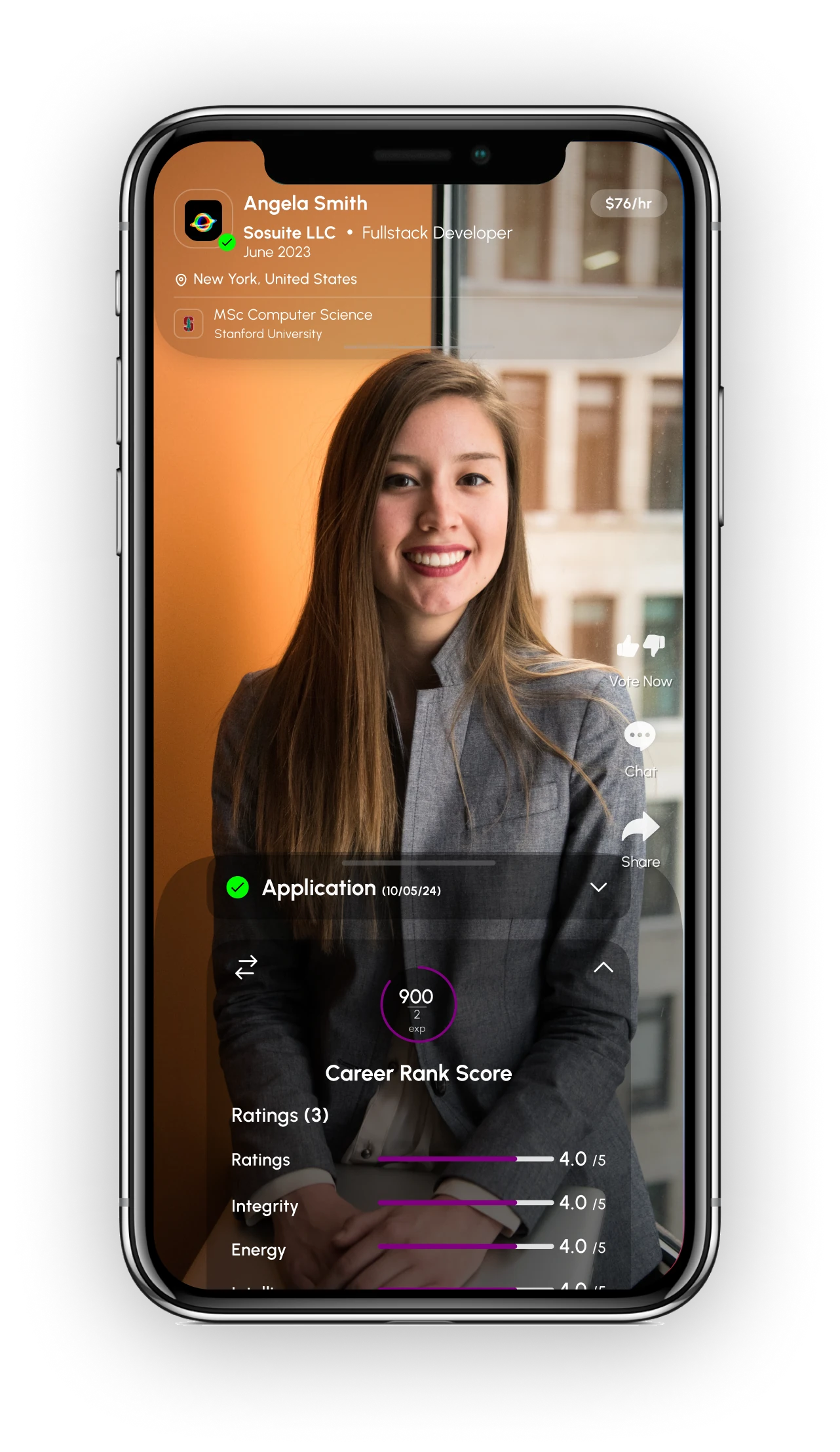
Carry forward durable identity, employment, and credential evidence. Revisit only what is missing, stale, role-specific, or contradictory. This is how Sorcrr shortens the front of the funnel without pretending the decision is already made.
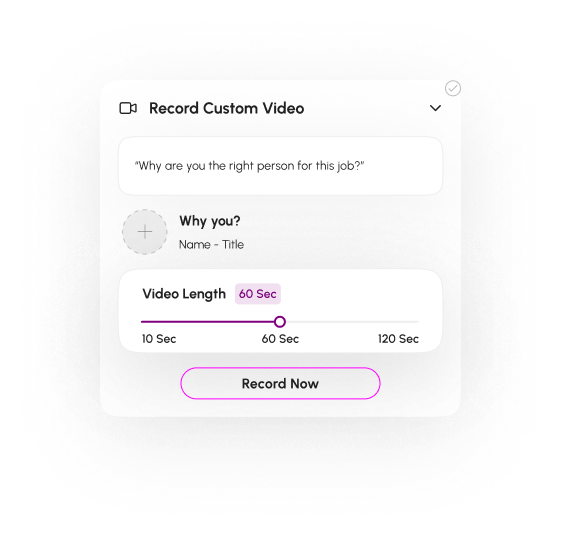
Sorcrr lets a team add up to five short video questions, with answers up to two minutes each. That is the product capacity—not the recommended default. Start with one or two only when hearing the candidate explain their thinking adds useful signal before a call.
Video can carry conviction, nuance, and motivation that a form may flatten. Evaluate the substance of the answer, not camera energy or polish.
“Why this company, this problem, and this role now?”
Listen for informed motivation and honest tradeoffs—not performative enthusiasm.“Tell us about the outcome in your background most relevant to this role. What was personally yours?”
Listen for specificity, ownership, scale, and what can be checked.Give one short, realistic scenario and ask for the first questions, assumptions, and steps.
Do not turn a two-minute response into unpaid consulting.“Which part of this role will come naturally, and which part will require deliberate learning?”
Look for credible self-appraisal, not rehearsed weakness theater.Standardize the signal. Use the same prompt, time limit, and rubric for comparable candidates. Explain why video is used, provide captions or transcripts, and offer an accessible equivalent route.
Assume a polished answer may be AI-assisted. Video adds human context, but it does not prove unaided thinking—a candidate can read an AI-generated script. Make the tool rules explicit and ask what assistance they used. When original reasoning matters, follow the answer with a short real-time probe or fair work sample and evaluate whether the candidate can explain, challenge, and adapt the thinking.
First-time interviewers often compensate for uncertainty by talking too much, improvising questions, or adding rounds. A good interview is warm, consistent, and disciplined. It has one job, a prepared question path, and enough silence for the candidate to reveal useful detail.
Review the role scorecard, candidate evidence, and exact questions this interview must resolve.
Welcome the candidate, explain the format, and create a respectful, low-theater environment.
Let the candidate do roughly 80% of the talking. Probe for actions, tradeoffs, and outcomes.
Give a realistic role preview and leave real time for the candidate’s questions.
Record evidence and a recommendation before seeing anyone else’s view.
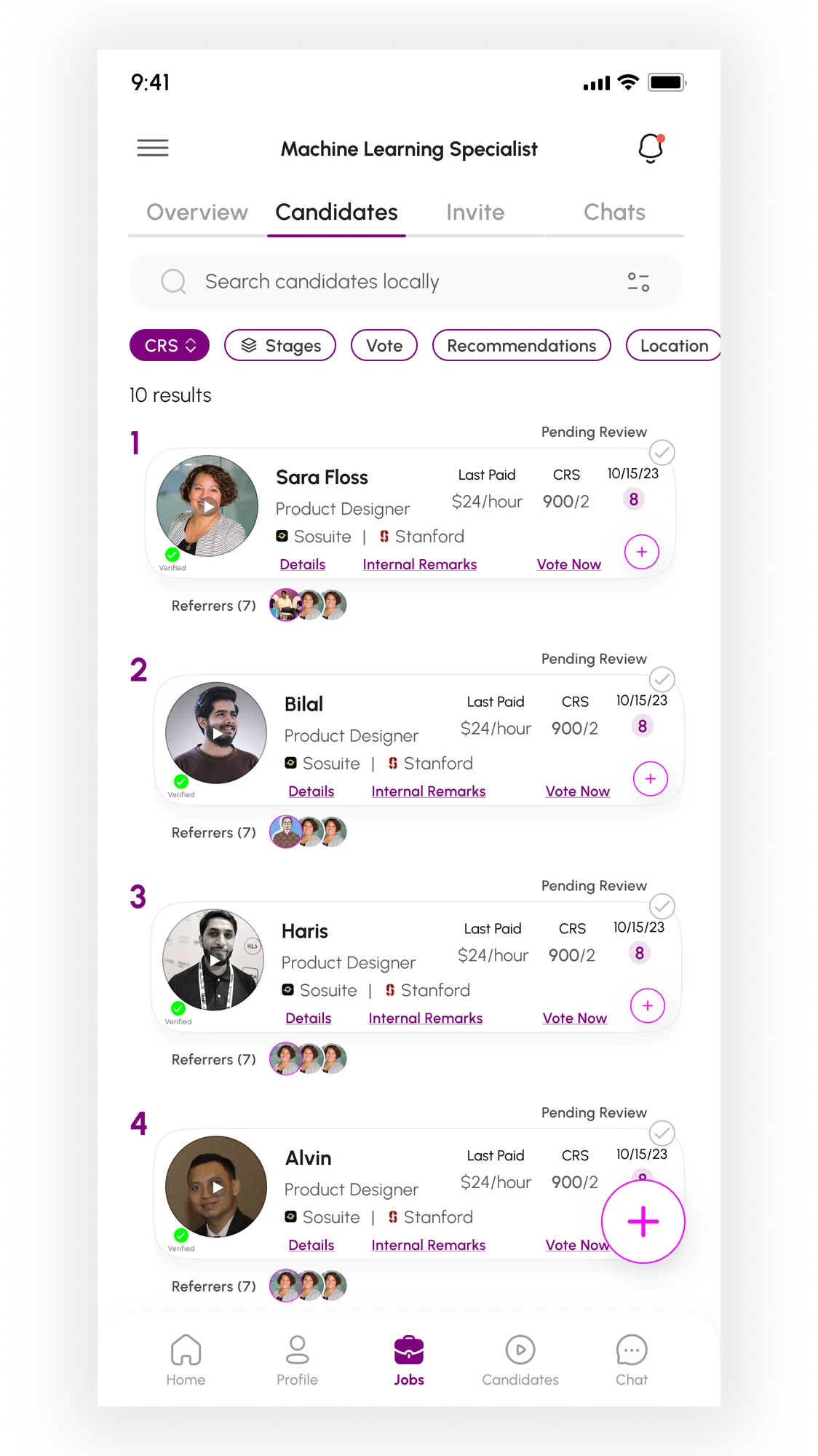
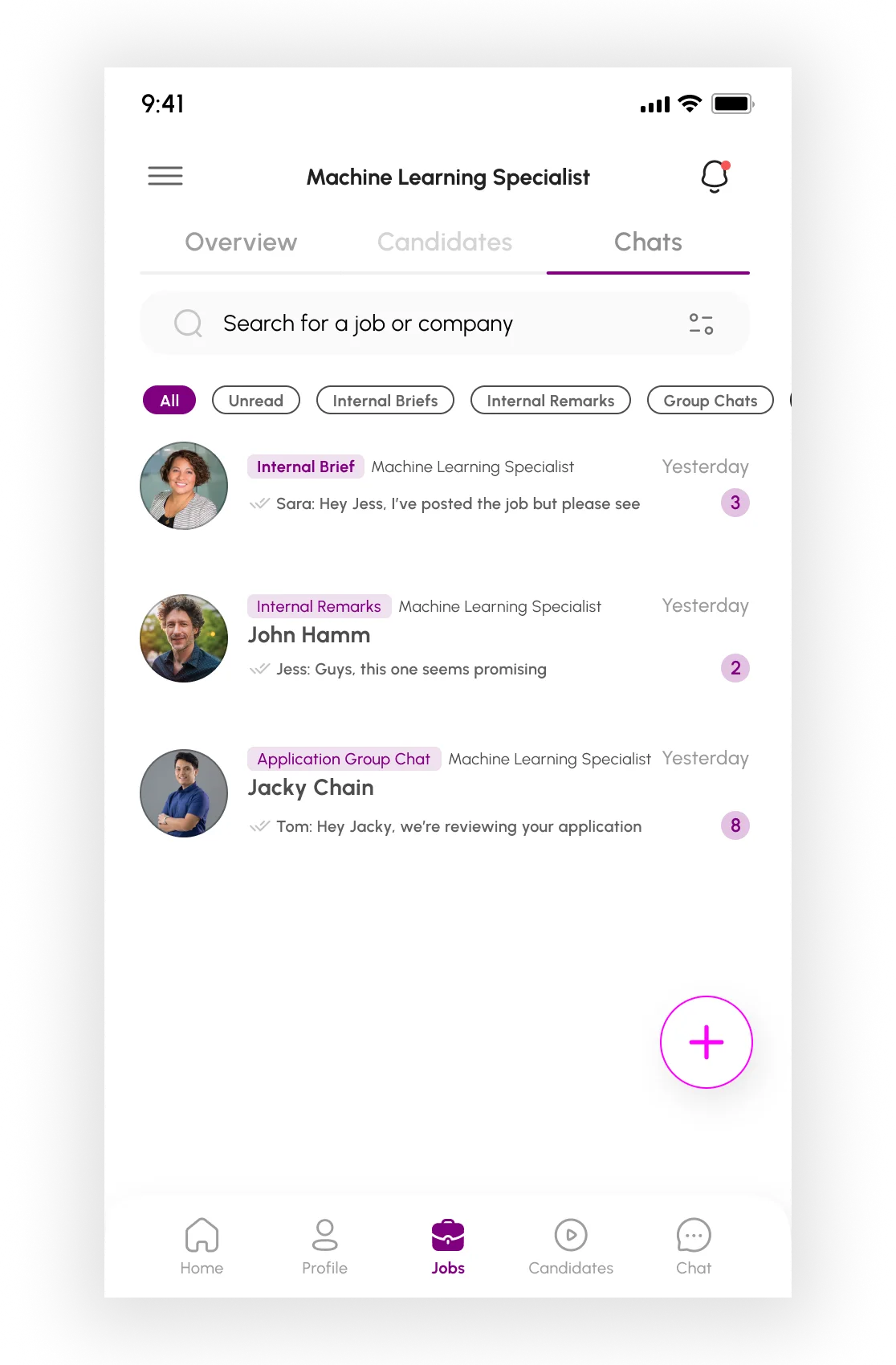
Be personable without coaching the candidate toward the answer. Ask the same core questions across comparable candidates, then use person-specific follow-ups where their history creates a real question.
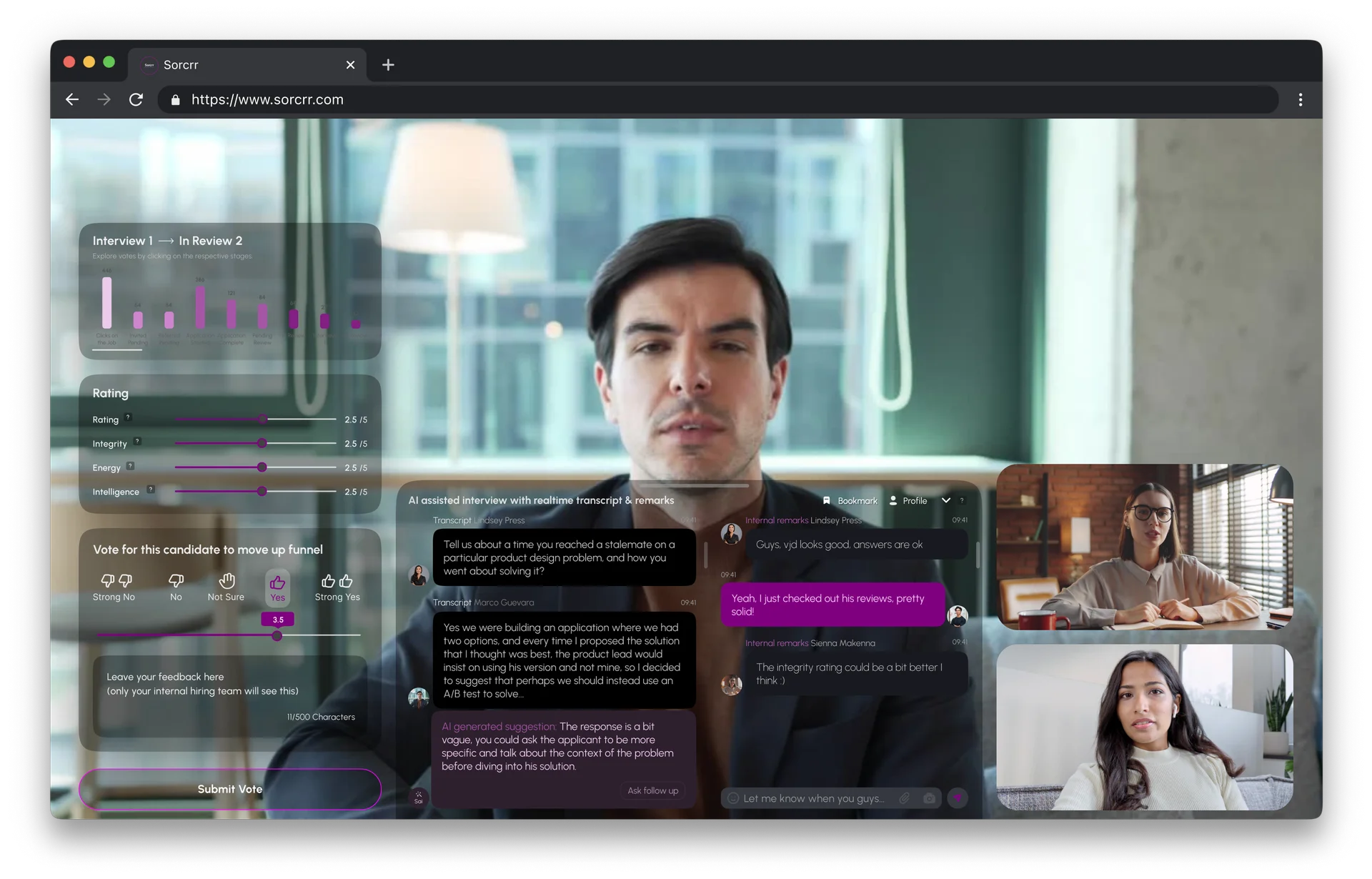
Where enabled, SAI can prepare a question plan, suggest neutral follow-ups, translate technical language, and surface inconsistencies for human review. It must not diagnose deception, infer honesty from face or voice, or decide who advances.
In a traditional process, the initial or screening interview is usually the first live judgment point. Sorcrr can replace it in most cases: the reusable profile, job-specific async answers, verification, reviews, and CRS may already show enough role relevance, informed motivation, contribution, and practical fit to move directly to the deeper structured interview.
Keep this 15–20 minute live screen available just in case: use it when evidence is incomplete, a constraint needs real-time clarification, the candidate was directly sourced, or a short mutual-fit conversation will prevent wasted time later. The questions below are the fallback guide—not a compulsory round.
Every plausible candidate receives a first screen to repeat résumé basics, explain motivation, and surface constraints.
Review reusable human signal first. Skip the call when the basics are already clear; use it only for a real unanswered question.
Role relevance, motivation, contribution, compensation, timing, location, and mutual fit.
The hiring manager or a trained interviewer who understands the actual role and advance bar.
Extend only when the reusable profile or prior evidence is materially incomplete.
Use “Not Sure” only for one named, testable risk—not general discomfort.
“Why are you considering a move now, and why this role specifically?”
Follow with which parts of the actual work interest them most and least.“Which result in your background is most relevant? What did you personally do?”
Look for enough comparable evidence to continue, not complete mastery.“What do you want to own, learn, or become better at in your next role?”
Test whether the actual work supports the candidate’s direction.“What are you unusually good at? What kind of work drains you or is not a strength?”
A credible answer contains evidence and tradeoffs, not a disguised strength.“In one minute, how do you understand our company, product, and the problem this role owns?”
Do not demand insider knowledge; look for preparation and sound questions.Ask about compensation, availability, location or time zone, working model, and non-negotiables.
Surface mismatches early and discuss them without treating legitimate needs as low commitment.Do not retest everything. The screening interview is not the place to repeat durable verification, walk every résumé line, conduct a deep values interview, or prove full technical mastery. Score role relevance, motivation, clarity of contribution, and workable constraints—then communicate the decision quickly.
Use a career-history interview when the cost of error is high, the role is senior, prior evidence contains meaningful gaps, or a short work sample cannot answer enough. The goal is a coherent, fact-driven account of education, work, choices, motivations, outcomes, and transitions.
What resources, constraints, and expectations did you inherit?
Then ask what changed because of their work and what was personally theirs.Compare with the plan, prior period, peers, or another credible benchmark.
Concrete numbers help, but context matters more than forced precision.What would that person say were your strengths and where you needed support?
This creates a claim that a later reference can verify.What pulled you toward the next role, what pushed you away, and what pattern do you see now?
Career choices should make sense alongside stated goals and motivations.Walk the timeline chronologically and notice what has not yet been explained. Gaps, overlapping roles, omitted jobs, unusually vague transitions, or dates that change between a résumé, profile, and interview can surface the choices and circumstances that shaped the candidate. They can also reveal an attempt to hide something—but they are not proof of concealment on their own.
A discrepancy may be concealment—but it is not a verdict. Ask a neutral follow-up, record the explanation, and verify material job-related facts consistently. Do not treat time outside paid work as evidence of low integrity or commitment.
Keep the inquiry job-related and follow local law. Do not press candidates to disclose medical conditions, disability, pregnancy, childcare or family status, religion, or other protected personal details. A candidate can explain a period at the level relevant to their work history without surrendering private information.
AI-assisted fact checking means better questions, not machine truth. SAI can compare authorized profile, résumé, interview, and role evidence; identify gaps or contradictions; and suggest a neutral follow-up. A human must verify the underlying fact and interpret the context.
AI changes what counts as signal. Almost any candidate can use AI to produce a fluent answer, attractive case study, or plausible code sample. The artifact still matters, but the stronger signal is the process behind it: how the candidate frames the problem, directs the tool, checks its work, makes tradeoffs, and responds when the first answer is wrong.
Probe until the evidence is concrete: what happened, what they did, what alternatives existed, what the result was, and what they learned.
Mirror the role rather than testing trivia: debug a realistic issue, run a discovery call, diagnose a funnel, prioritize a messy operations queue, critique a product artifact, or work through a strategic scenario.
For software and other AI-enabled roles, let candidates work with the tools they would realistically use: Codex, Claude Code, Cursor, or whatever capable agents are current when you hire. Proficiency is not measured by whether they know one brand. Look for transferable judgment:
Pair the tool-supported task with a short real-time walkthrough. Change one constraint, ask the candidate to critique the agent’s output, or have them debug a failure. The goal is to understand their thought process and ownership—not to reward memorized prompts or require performative coding without the tools the job actually uses.
A values interview should not reward personality sameness or the person who best repeats your website. It should reveal how the candidate has acted when legitimate responsibilities collide, bad news is unwelcome, or doing the right thing carries a cost.
Before interviewing, choose the three to five values most relevant to the company and role. Translate each one into observable behavior, a failure mode, and evidence that would support a rating. Ask candidates about their own values before fully explaining yours; otherwise you may mainly measure their ability to mirror you.
Surfaces bad news, protects trust, and accepts a real tradeoff.
“Tell me about doing the right thing when it cost you status, money, time, or convenience.”Can respectfully challenge power, customers, or the prevailing view.
“When did you tell a manager or customer something they did not want to hear?”Names their contribution accurately, shares credit, and owns failure.
“Tell me about a mistake you could have hidden. What did you do?”Maintains standards without contempt, avoidance, or manipulation.
“What working relationship has been hardest for you, and how did you keep it productive?”“Tell me about a decision where speed and quality, loyalty and truth, or empathy and accountability pulled in different directions.”
“Tell me about a rule you challenged or broke. Why, who was affected, and what safeguards did you use?”
“Who or what shaped your values most? Which value has changed as you gained experience?”
“What connects you to this work? What about our mission, model, or way of working concerns you?”
No interview reveals someone’s “true values” with certainty. Look for specific behavioral evidence and consistency across their career story, work, communication, and references. A contradiction is a question to verify—not permission to diagnose character.
Interest in compensation, benefits, flexibility, or advancement is not a values failure. Evaluate how candidates make commitments and tradeoffs—not whether they ask legitimate questions about an offer.
Work proof is optional. Use it when observing realistic work will answer a material question more fairly than another interview. Skip it when structured interviews, prior work, references, or a live simulation already provide sufficient evidence.
| Format | Typical scope | Use it to learn |
|---|---|---|
| Live work sample | 30–90 minutes | One narrow skill, judgment call, or collaborative working pattern. |
| Paid project or trial | 1–5 days | Output, learning, communication, reliability, and responsible tool use in realistic conditions. |
| Lawful probation | Defined employment period | Mutual fit after hire, with clear terms, outcomes, feedback, and local legal review. |
Observe the work behind the output. In an AI-enabled role, a finished artifact alone may reveal little about how it was produced. Let candidates use realistic, disclosed tools, then ask for a live walkthrough, a revision under a new constraint, or a demonstration of how they verified the result. A paid trial can provide strong signal when the remaining risk truly warrants it—but it remains optional.
A fair brief states the objective, context, deliverable, time cap, pay, status, access, confidentiality, AI rules, question channel, rubric, decision date, and how the candidate can evaluate the company. Never turn a “trial” into unpaid productive work or a loophole around worker protections.
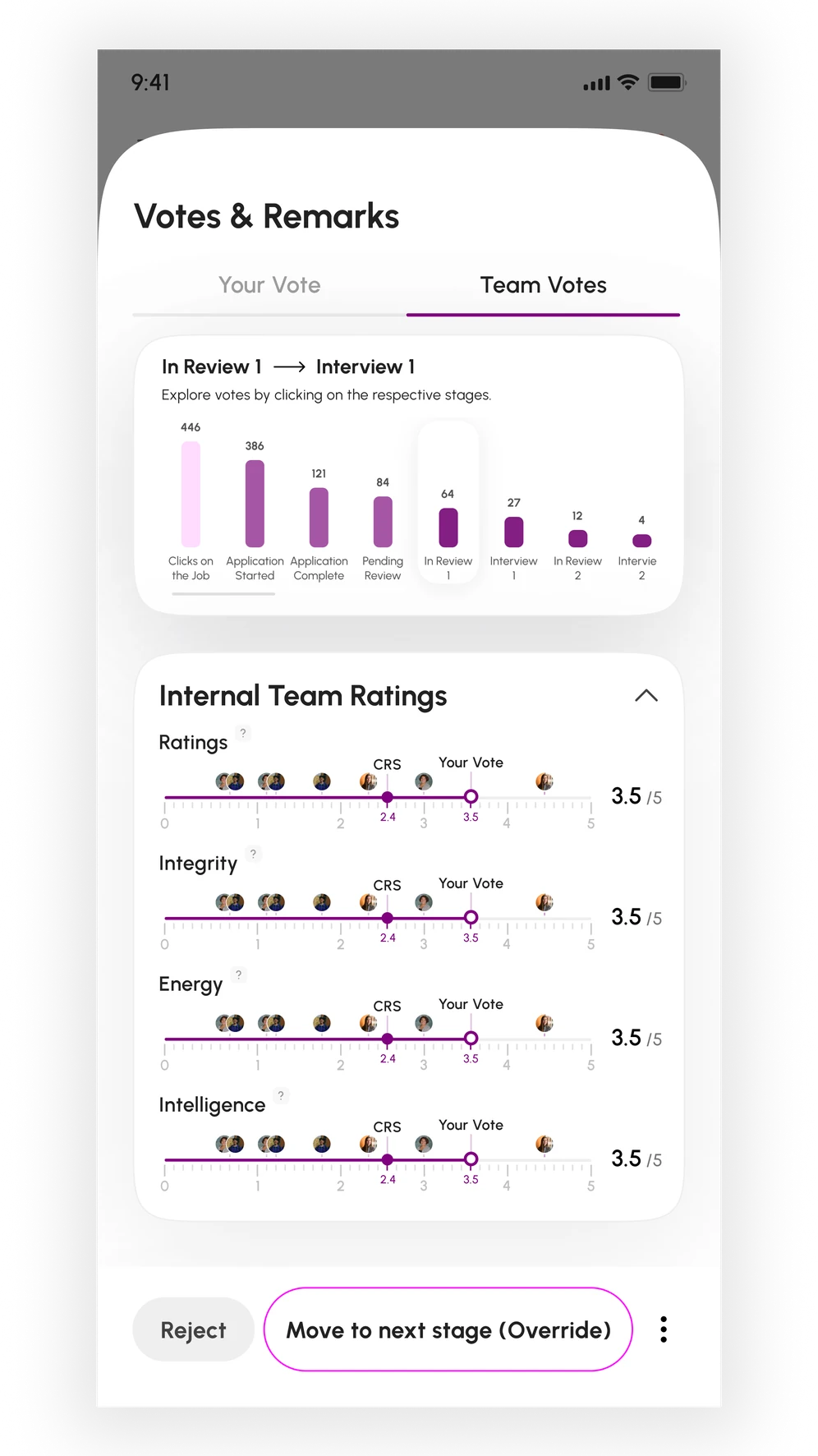
The order protects judgment: review → rate → write evidence → lock → reveal the team view → let SAI organize → debrief → hiring manager decides.
Do not add an interview merely because the group feels uncomfortable deciding. Listen carefully to evidence-based dissent, then let the named hiring owner make the call.
References should verify the risks and claims the process already surfaced. Ask what the person owned, where they were strongest, where they needed support, how they handled mistakes or conflict, and whether the reference would enthusiastically work with them again.
The founder or hiring manager should explain why the company, why the role, and why this person. Present the strongest credible package, clarify the first 90-day outcomes, and make the next communication date explicit. Keep strong finalists informed until written acceptance rather than leaving them in silence.
| Moment | Operating target |
|---|---|
| Acknowledge a referral or application | Immediately |
| Review profile, verification, reviews, and CRS | Within 24 hours |
| Complete the scorecard after a live step | Same day |
| Send the next step or rejection | Within 24 hours of the decision |
| Show candidates the process and time commitment | Before they enter it |
| Communicate a delay | Before the candidate has to ask |
Every score, ranking, video review, generated test, and AI-assisted recommendation used in hiring is part of the selection process. The employer remains responsible for job relevance, accessibility, fairness, and the final decision.
Draft role and funnel artifacts, retrieve authorized evidence, suggest questions, summarize interviews, flag gaps, create structured test variants, and consolidate locked feedback for review.
Infer honesty or intelligence from face or voice, score protected traits, fabricate evidence, conceal material use, deny an accommodation, or auto-reject without job-related criteria and human review.
Give required notice for recording, transcription, or material automated assistance. Provide accessible formats, reasonable accommodations, and an equivalent non-video route. Employment and AI rules vary by jurisdiction; obtain current local advice before deployment.
The improvement loop. Define better → source through trust → see human signal → inspect evidence → test only what remains → measure the hire → improve the next funnel.
A candidate can be exceptional and still be the wrong addition for this moment. Start with what the team needs now: a missing capability, a stronger operating habit, a different but job-relevant perspective, greater trust across a boundary, or someone who makes the people around them more effective. Evaluate the contribution they can make to the whole—not only their individual output.
What important capability, experience, or perspective would this person add rather than duplicate?
“What becomes possible for the team if we hire them?”Whose work becomes better, faster, clearer, or more ambitious because this person is present?
“How have they made teammates more effective before?”Can they surface uncomfortable truths, disagree constructively, and improve the team’s decisions?
“Where might they productively change how we think or work?”Can the team support their direction while they raise its standards, capability, and resilience?
“Will the person and the team be better a year from now?”This is team contribution—not vague “culture fit.” Do not select for familiarity, social comfort, personality sameness, or who feels most like the existing team. Define the missing contribution before interviews and judge observable, job-related evidence consistently.
Hiring at the frontier will always contain uncertainty. The answer is not more ritual. It is a clearer brief, a more human view of the candidate, and a disciplined record of what the evidence does—and does not—show.
Name the problem, outcomes, evidence, compensation, and decision owner before you source.
Let candidates meet the role, manager, and team through honest video and context.
Activate trusted people with a clear brief, tracked sharing, and meaningful incentives.
Review the profile, async answers, CRS, verification, reviews, and recommendations before booking another performance.
Use screens, structured interviews, values questions, work proof, and references only to resolve what remains.
Write the evidence, vote independently, choose the person who makes the team better, and close with clarity.
The frontier will be built by people. Hire them with the care the work deserves.
Sorcrr brings the story, trusted network, evidence, interviews, and decision into one connected process—so you can replace empty stages with better signal and make a decision your team can explain.